 DE
DE  EN
EN  FR
FR  FR
FR  NL
NL  NL
NL 

Categories, sun protection indices and polarization
There are several categories of sun protection (0, 1, 2, 3, 4):

These are light-colored lenses (transparent or yellow) with a very slight tint. They filter out 0-19% of the sun's rays, and are mainly used for sports. We do not recommend or sell this category on our website.

These are light-colored. They filter out between 20% and 57% of the sun's rays. They are, in general, sunglasses for aesthetic protection and comfort. This filtration category is very light and does not provide effective protection from the sun/ultraviolet radiation in the event of prolonged exposure.

These lenses filter out 58% to 82% of ambient solar luminosity. This protection will be effective in situations of average sunshine. They can also be worn in changing sunlight and in between seasons, such as early spring and late autumn.

These lenses offer a perfect filter for most sunlight situations. Your solar lenses will filter out 83% to 92% of the sun's luminosity. They provide excellent protection against the sun's rays and glare in most activities.

These lenses are particularly effective in bright sunlight. This is the most powerful filter of all, filtering out up to 97% of light. It is only used in cases of extreme solar luminosity, or in the equipment of children who are more vulnerable than adults. It is forbidden for driving, as it alters vision and ocular color perception.
For better readability and optimal comfort, you'll find these indications on every model presentation.
All our glasses and frames are CE-certified.
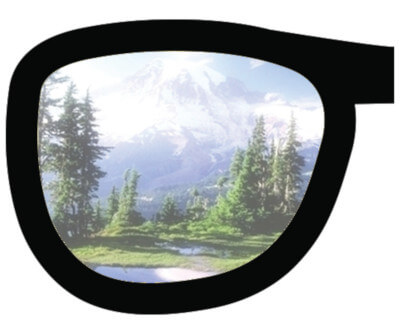 Non-polarized lenses
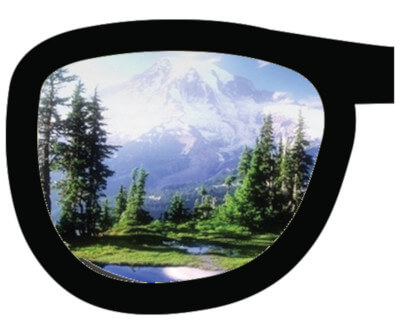 Polarized lenses
Light waves travel in multiple directions, reflecting off surfaces such as water, road surfaces, snow, etc. The light's axis of vibration is altered. Light reflected from flat surfaces is said to be "polarized" because it vibrates on a horizontal axis. This causes glare. Polarizing glasses block polarized light, allowing only light carrying information to pass through. Visual acuity is improved because the information received by the eye is not altered. Polarized lenses can be thought of as filters that eliminate reflections from reflective surfaces such as snow, water and wet roads.
Polarized lenses are therefore an effective ally for sports where performance depends on accurate observation of the environment, without any parasitic effects. However, polarized lenses are particularly popular by the sea or in the mountains for their optical qualities, and will delight the majority of users, whether or not they are sports enthusiasts.







 Loading...