 EN
EN  FR
FR  FR
FR 

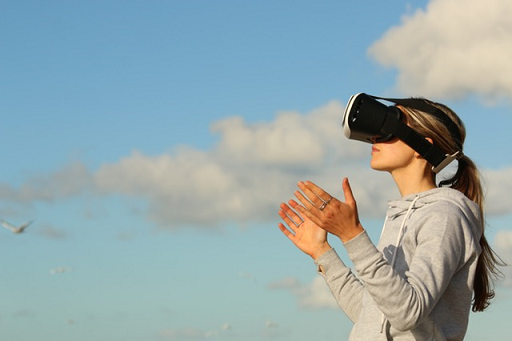
In the fields ofoptics and technology, recent years have seen a myriad of developments, always with the aim of immersing the viewer in an experience as close to reality as possible. First came 3D, with televisions and cinemas, then another technology made its appearance, and one that we hear about more and more on a daily basis: virtual reality.
What is virtual reality?
Virtual reality is the experience of being immersed in a virtual world, using a headset that prevents us from seeing the real world around us, thus optimizing the experience. What's more, virtual reality enables users to interact intuitively and naturally with this world.
How does it work?
Basically, a computer creates a 3D simulation of a virtual environment. Of course, the environment has been modeled and adapted to suit the format.
The device, which is attached to the head, has two screens in front of each eye. Of course, in front of each eye there are lenses that allow each eye to see sharp images without having to exert any effort.if you want an analogy, it's as if you had to read an article two centimetres from your eye - it's impossible, so we place a "magnifying glass" in front of your eyes, so that what you're looking at becomes clear and legible.
Another parameter also comes into play: the number ofimages per second. When watching television, the frame rate is 30 frames per second, which is more than enough for the eye to get a correct result.
As for video games, some now reach 60 frames per second, so rendering is much smoother.
However, when it comes to virtual reality software, you need at least 90 or even 120 frames per second for optimum results.
When all parameters are optimal and image refresh rates are correct, the "presence effect" is produced, which can be felt by people who have tried their hand at virtual reality. This effect can be translated as the sensation that what you're looking at is tangible, when it's obviously not.
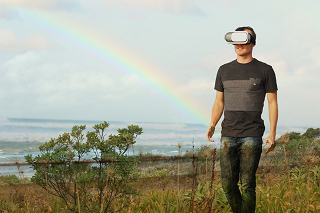
What's the point of virtual reality?
As we've seen, virtual reality immerses the user in a virtual world, but what's the point?
Immersing yourself in another "dimension" opens up a vast field of possibilities. First of all, in video games, manufacturers have integrated it into their technology, giving access to a very real, bluffing experience.
Another example is real estate developers and travel agencies. Indeed, what better way to get a feel for the place than tohave the impression of being there? Virtual reality makes this possible. We can be sure that this optical technology will continue to develop and be used in as many fields as possible.
What about augmented reality?
Be careful not to confuse virtual reality and augmented reality. Although the terms are similar, they are not the same technologies.
The aim of augmented reality is to combine the real world with digital data in real time, thus creating an interaction between the real world and the virtual world.the latter will be adjusted if a change is made in the real world.
So what does this mean in concrete terms? Augmented reality means bringing virtual images into our real world, in real time, with which we can interact. In other words, unlike virtual reality, augmented reality keeps the real world as its main medium.
Implementing augmented reality

Augmented reality was implemented in a very famous game not long ago: Pokémon Go is a typical example of what augmented reality can be. Thanks to your smartphone's camera, you can see the world around you, and you can also see virtual creatures appear, looking real through your camera.
In terms of optical devices, augmented reality glasses have also been released. These include the Google Glasses, which let you see a digital interface in your field of vision, and the Spectacles from the famous social network Snapchat, which let you take photos directly with these glasses and send them to friends and family.
Whether it's augmented reality or virtual reality, these technologies based on the fundamentals of optics will continue to evolve. Who knows, maybe in a few years we at Mymonture will be able to offer you corrective eyewear incorporating such technologies.







 Loading...