 EN
EN  FR
FR  FR
FR  NL
NL  NL
NL 

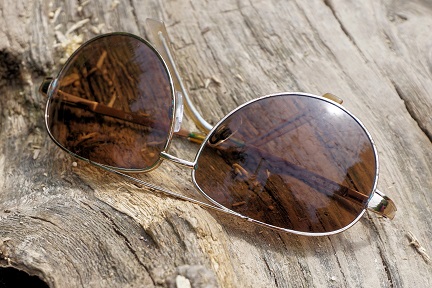
Who doesn't know this famous brand of eyewear, both prescription and sunglasses? These days, it's hard to miss Ray-Ban, the brand that all the stars love so much. But do you know its history? Mymonture reveals one of the most beautiful success stories in the world of optics.
First of all, what does the name Ray-Ban mean? Was it chosen at random because it sounded good? Well, no, absolutely not. Ray-Ban is actually a contraction of Ray-Banner, which in French means " to banish the sun's rays ". Let's look back to 1853 to retrace the history of the eyewear brand. In that year, two opticians, John Jacob Bausch and Henry Lomb, founded their ophthalmic research company, Bausch&Lomb, which is still a market leader today, particularly in contact lenses.
At the time, they were interested in sunglasses, and their goal was simple: to create sunglasses that would provide protection from the sun. The catalyst for their success? The U.S. Army, looking for solutions to the problem of glare at high altitudes, and the famous Aviators were born. To this day, these glasses are still associated with military pilots, so much so that they have been influenced by this environment.

A little later, in 1930, several pilots complained of headaches caused by the brightness at high altitude. The Bausch&Lomb group looked into the matter and came out with the RB3 lens, which was green in color and actively filtered out ultraviolet and infrared rays. The lens was patented "Ray-Ban" for its preventive action (it banished the sun's rays). And it was this very name that became the final name of the famous brand, in 1937.

During the Second World War, the Aviator model was improved, and adopted not only by the army, but also by Hollywood stars. It was also after the end of the Second World War that Aviators were exported to Europe, along with a large part of American culture.
Then in the 1950s, and more precisely in 1952, Ray-Ban launched the Wayfarer, which completely broke the mould and revolutionized eyewear design by introducing one of the first plastic glasses. Click here to read our article on the Wayfarer's cult status.
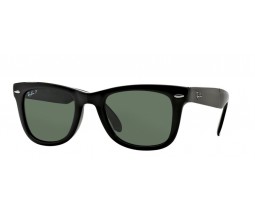
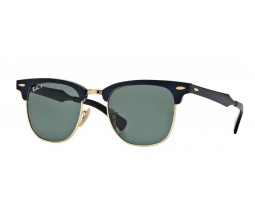
Between 1960 and 1980, these two models enjoyed rapid growth, appearing on the noses of pop stars such as Michael Jackson, Ray Charles and Malcolm X, who popularized Ray-Ban Clubmaster in 1986.
In the meantime, the brand was taken over by Luxottica, and since then, Ray-Ban has continued to produce and design ever more models and variations, both prescription and sunglasses.
Ray-Ban is also one of the few brands with such a long history that continues to win over the world with its timeless designs.







 Loading...