 EN
EN  FR
FR  FR
FR  NL
NL  NL
NL 


You may have heard of it, but not necessarily know what it means. In fact, low vision treatment is all about providing the best possible support for people with impaired vision. Today, Mymonture explains how best to treat someone with low vision.
First, let's define what a visually impaired person is. It's an individual who has suffered a significant deterioration in visual acuity or a reduction in their visual field. This can be due to a number of causes, including age, AMD, diabetes or glaucoma.
Of course, a person suffering from low vision will see their vision progressively diminish, and conventional optical equipment will unfortunately be unable to improve this loss of acuity and/or visual fields. A person suffering from low vision must also be monitored, so that the optician can propose the solution he or she deems best.
Before talking about improving low vision, let's look at the different categories that exist, of which there are 5.
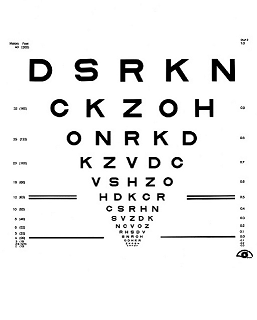
- Moderate visual impairment: this is the least severe form of low vision. After visual correction, acuity is between 1 and 3/10 and the visual field is at least 20°
- Severe visual impairment: after correction, acuity is between 1/20 and 1/10. The subject can count the fingers of one hand at a distance of 3 meters.
- Profound visual impairment: after correction, visual acuity is between 1/50 and 1/20, enabling the individual to count on the fingers of one hand at a distance of one meter.
- Near-total visual impairment: after correction, visual acuity remains below 1/50. However, the person still perceives light. However, it is impossible to perceive different shapes.
- Total visual impairment: Blindness is total, with no light perceived by the individual.
As a reminder, a visual acuity of 1/10 enables you toorient yourselfoutdoors, and an acuity of 4 to 5/10 enables you to read a newspaper in good light.
Having defined what low vision is, we're now going to look at how we can reduce it as much as possible to improve the life of the individual affected.
As mentioned above, low vision cannot be corrected with conventional corrective equipment. As a result, several types of device have been created to make life as easy as possible for the visually impaired. These devices may be purely optical, or may also incorporate electronic components, depending on their intended use.
Among the different systems we can find :
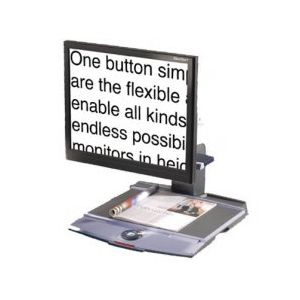
- Optical or electronic magnifiers, which can magnify an object or text in general. They may or may not be equipped with lamps.
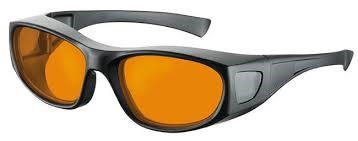
- Various filters to be affixed to lenses, generally yellow/orange in color (the color of the retina), to improve contrast for the visually impaired.
- Electronic aids of all kinds, which don't necessarily work optically, but which nevertheless make life easier for the visually impaired. There are, for example, text-to-speech tools that can describe the surrounding environment to the person wearing the system, such as the name of a street, the face of a person who has been recorded beforehand, and many other things.
Even if current equipment cannot significantly improve the eyesight of people with low vision, there are a number of devices that can help the visually impaired in their everyday lives, with the aim of making life more comfortable. Optics is not just about lenses of different powers, but rather about a wide range of equipment that enables people with visual impairments to live as comfortably as possible.







 Loading...