 EN
EN  FR
FR  FR
FR  NL
NL  NL
NL 


Astigmatism is not an easy concept to grasp. In fact, it can be coupled with myopia and hyperopia, which means that symptoms vary from case to case. This week, we take a look at how astigmatism works, where it comes from, the different ways it can be written and how to correct it.
What is astigmatism?
We briefly discussed astigmatism in our article on eye disorders, without going into detail. Unlike myopia or hyperopia, it has no specific symptoms, and there are several types of astigmatism.
But what exactly is astigmatism? It's a deformation of the ocular surface that results in different corrections under two perpendicular axes of the eye. In other words, the correction is not all the same along the different axes of vision. This can lead to distorted lines, or headaches in near and/or distance vision, if the astigmatism is not corrected.
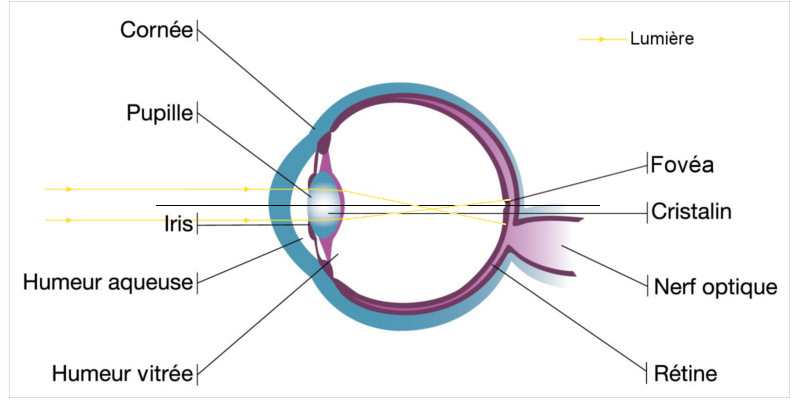
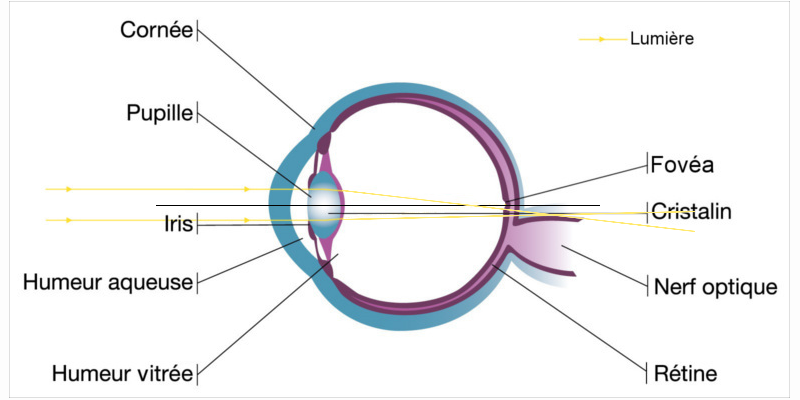
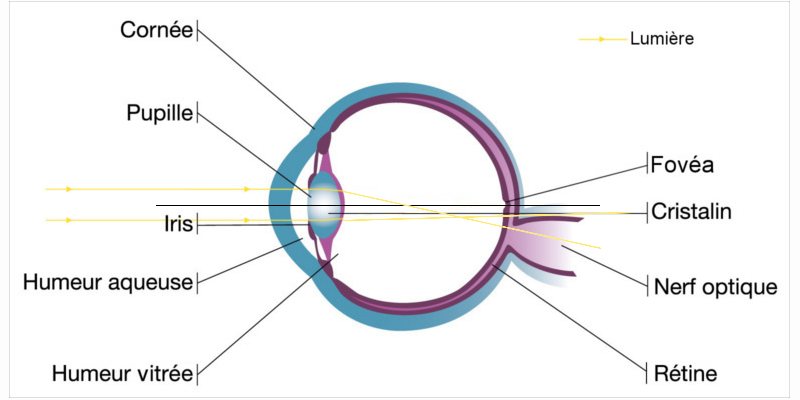
So, a person with astigmatism can either :
- Have both axes myopic
- Have both axes hypermetropic
- Have one myopic and one hyperopic axis
How does it appear?
Now that we've seen what astigmatism is, let's take a closer look at its origins.
The eye is made up of two organs that are responsible for refracting light - in other words, for ensuring good vision: the cornea and the crystalline lens.
These two parts of the eye are supposed to be spherical, so that power is the same everywhere. In practice, however, the power of the eye is rarely the same everywhere, and the radius of curvature may be greater in certain parts of the eye.
If the eye has a slight deformation of the cornea or lens, this will create what is known as a cylinder, and this is why patients with astigmatism need a cylinder with an axis in their correction to correct this defect.
How to read it on a prescription
There are several ways of writing astigmatism, and this can sometimes be misleading. There are two types of writing: positive cylinder (generally used by opticians) and negative cylinder (mainly used by ophthalmologists).
To better understand how to read it on a prescription, let's look at a few examples:
Example 1: +2.00 (-0.25) 110°
Here, we can see that there is a sphere of +2.00, a cylinder of -0.25 and a cylinder axis of 110°.
We can, however, write this same correction in another way, namely:
+1.75 (+0.25) 20°
How does transposition work? In reality, to go from one to the other, we simply add the sphere to the cylinder (which gives us the new sphere), take the opposite of the cylinder to replace it (+0.25 instead of -0.25 in this case) and add or subtract 90° to the axis (110° - 90° = 20°).
Let's take another example:
-0.50 (+0.50) 90°
To obtain the sphere -0.50 + 0.50 = 0 so plane
To obtain the cylinder +0.50 --> -0.50
To obtain the axis at 90° - 90° = 0°
Note: the axis can also be written 180° in this case.
Correcting astigmatism
To correct astigmatism, we can use corrective lenses or contact lenses these compensate for one of the powers of one axis, making it equal to the other.
Naturally, the mymonture.com team will be happy to answer any questions you may have about your prescription, to help you understand it and make the best choice.







 Loading...