 EN
EN  FR
FR  FR
FR 


In recent weeks, we've had the pleasure of announcing the launch of lenses on our mymonture website, whether they be corrective lenses as well as corrective and non-corrective colored lenses. This week, we're going to go one step further and explore the pros and cons of glasses and contact lenses - here we go!
Before we start, it's important to remember that contact lenses are medical optical equipment, and that you need to be very careful when using them.
Glasses
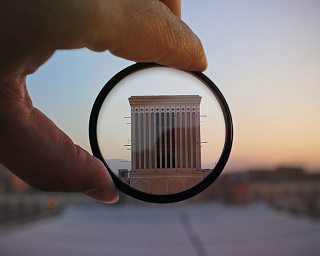
Glasses are generally used for the first wear of optical equipment. They are practical and require no special arrangements.
All you need is a prescription from an ophthalmologist to obtain your correction. Once you have the prescription in your possession, you can order the frame of your choice directly. If you'd like to find out more about morpho visagism, take a look at our article on how to choose the right pair of glasses for your face morphology.
Glasses have indeed become a form of self-expression and an undeniable fashion accessory, having gone beyond the stage of a simple "vision correction device" to become iconic, in the case of certain models.
Eyewear is therefore aimed above all at those who want to assert their own style, thanks to frame collections offering an extraordinary diversity of choice.
Contact lenses

Contact lenses are above all for people who are careful and patient. Indeed, lens fitting can sometimes be a long and tedious process, with the ophthalmologist having to carry out a battery of tests to find out which type of lens you should wear.
However, once you've found the lens that's right for you, you'll be able to recommend it with ease.
The first advantage of lenses over glasses is that they provide an improved field of vision. The eye is free to move and you'll see clearly wherever you look, unlike glasses where you're restricted to the size of the frame.
Lenses are also an excellent choice, especially if you play sports on a regular basis, as there's no need to worry about dropping or damaging your glasses. Be careful, however, not to wear them when you're taking part in aquatic activities, as bacteria present in the water can come into contact with your lenses and then infiltrate your cornea, which can lead to certain complications.
In concrete terms, if you want to wear contact lenses, you need to ask yourself three questions:
Can you rigorously respect the various hygiene rules that apply to contact lenses, and remove them if you feel tingling or itching?
Can you tolerate the adaptation time needed to wear contact lenses, i.e. the various fitting sessions required at the ophthalmologist's?
Are you prepared to contact your optician or ophthalmologist in the event of persistent discomfort?
If you can answer yes to each of these questions, you'll be able to wear contact lenses.
Contact lenses and spectacles both have their advantages and disadvantages, and there's nothing to stop you from wearing the two alternately. Contact lenses to give you more freedom and a better field of vision, and glasses to give your eyes a rest and assert your style.







 Loading...