 EN
EN  FR
FR  FR
FR 

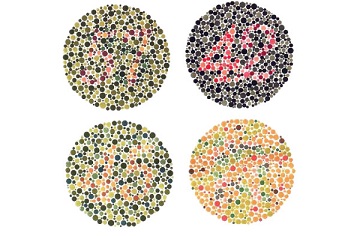
Dyschromatopsia, or color blindness, is a genetic disease whose symptoms can be summed up as poor color perception, depending on the type of color blindness. However, for some time now, American researchers have been studying the problem with the aim of finding a solution to correct it. Today, Mymonture explains what these glasses are, and how color blindness can be corrected.
A few explanations on color blindness
Before talking about corrective eyewear, let's take a look at color blindness and its origins. Color blindness is a disorder of color perception that affects 8% of men and 0.4% of women worldwide.
Let's zoom in on our retina, the membrane that lines the eye and acts as a screen for receiving images, which are then sent to the brain. The retina is made up of two types of photoreceptor cells, each with a different role to play in image analysis: cones (transmit information about color) and rods (transmit information about light intensity). Since color blindness is a color disorder, the fault lies with the cones. There are three different types of cone: L-cones (red-sensitive), M-cones (green-sensitive) and S-cones (blue-sensitive).
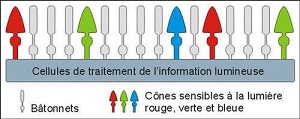
Thus, color blindness is by definition the absence of sensitivity in one or more cones, resulting in poor color perception. There are, however, several types of color blindness, depending on which cones are affected.
-monochromia is the total absence of sensitivity to all three colors (although this is very rare, affecting only one person in 40,000). People with monochromia see only different shades of gray in the world around them.
-dichromia, which corresponds to the absence of sensitivity to one color, with the other two pigments functioning correctly.
-abnormal trichromacy, where color vision is affected at different levels. The different pigments are present in the cones, but different hues are not perceived normally by the person affected.
Now that we've seen in detail why a particular person suffers from color blindness, let's take a look at a company of American researchers who have designed glasses that are claimed to be able to restore color vision.
The company in question is called EnChroma, and its aim is to give color-blind people back their ability to see the world in color. The glasses offered by the company are sunglasses that can be used during the day and outdoors. The glasses can therefore correct the two most common forms of color blindness, namely protanopia (red tends towards orange) and deuteranopia (green becomes yellow).
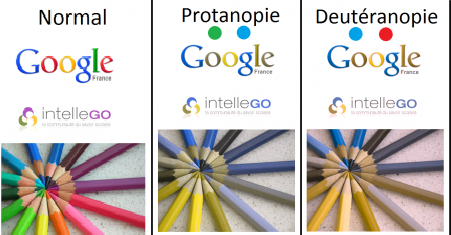
How does it work?
The principle is as follows: the glasses are fitted with a specific filter that blocks out certain wavelengths of light, thus confusing the primary colors andenhancing contrast in the environment perceived by color-blind people.
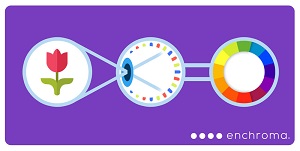
The origins of these glasses are coincidental, since the researchers were initially working on a project for laser protection glasses for surgeons. One of the brand founder's color-blind friends put on the glasses and realized that his vision was improved, and he had the impression of discovering new colors he'd never seen before. It was thanks to this disturbing experience that EnChroma decided to focus on a new project: color-blind glasses.
Unfortunately, we can't offer you any such glasses at present. However, we're keeping this idea in mind with the aim of improving your daily life through eyewear.







 Loading...