 EN
EN  FR
FR  FR
FR  NL
NL  NL
NL 


Last week, we focused on Mymonture frames, made from cellullose acetate. However, there are many different materials used in eyewear, some of them exotic. This week, mymonture is pleased to tell you about the different materials used to make frames.
Acetate
As we saw in the article on mymonture framesacetate is a natural plastic material extracted from cotton, which is then transformed into agglomerate sheets, cut and assembled to create a pair of eyeglasses.
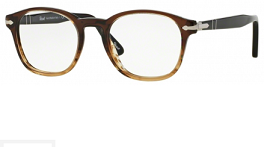
Persol model 3122
Injected plastic
Injected plastic is the most widely used material for eyewear. In fact, it allows a wide variety of colors, textures and shapes, and is relatively light compared to cellulose acetate.
However, the drawback of injection-molded plastic compared with acetate is that it is of poorer quality and can be more fragile, which explains its lower price.
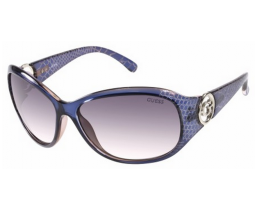
Guess model 7309
Titanium
Among metal frames, there are a myriad of different materials, and here we'll look at the most important and interesting in terms of properties. Titanium is one of the most popular materials, as it is light, strong and hypoallergenic. Titanium frames are also very robust, making them easy to adjust.
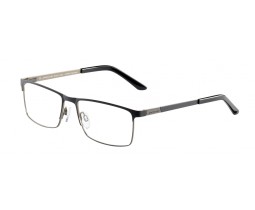
Jaguar frame 35047
Surgical steel
Like titanium, surgical steel is hypoallergenic and therefore recommended for people with fragile skin; it is also rustproof (hence the name surgical). What's more, it's less expensive than titanium. Surgical steel also enables designers to create designer frames with a unique look.
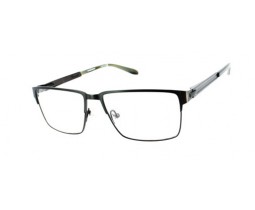
Façonnable model 2245
Wood
In recent years, wood frames have made their appearance among the major eyewear brands, and some new brands have even specialized in this noble material. They are very pleasant to the touch, with an inimitable style, but remain fragile and are not adaptable (wood cannot be deformed in the same way as plastic and metal), which remains the major drawback of wood. That's why there are more and more imitation-wood frames whose appearance is closer to the material.
Now that we've covered the classic materials, let's take a look at the rarer (and therefore more expensive) materials that are (or have been) used in eyewear by the great designers.
Horn
Buffalo horn is a noble and generally high-priced material, and is often used for luxury or designer frames. Like wood, horn can be used in combination with other materials. As horn is precious, it is handcrafted with the greatest care. There is no collection, and each pair has its own nuances and shades. Of course, precious materials require rigorous care, and you'll need to take great care of them to ensure they age as well as possible.
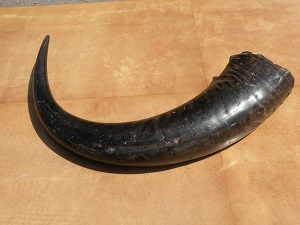
Buffalo horn
Genuine tortoise shell
Tortoiseshell, like buffalo horn, is an extremely high-quality and precious material. Today, however, it is forbidden to use tortoise shells to make tortoiseshell plates. Only opticians who still have them in stock can manufacture and supply them, hence their rarity and very high price.
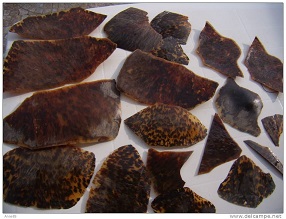
Turtle shell plate







 Loading...