 EN
EN  FR
FR  FR
FR 

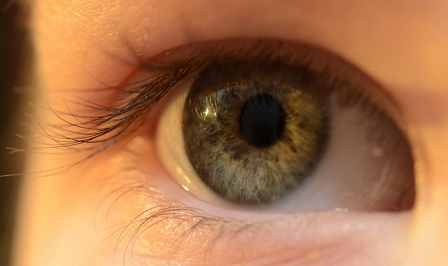
For some time now on mymonture.com, we've had the great pleasure of being able to offer you a selection of contact lenses, with the aim of also satisfying those who prefer to have a frame-free face. However, we couldn't offer you a new product category without giving you a few tips.
History of contact lenses

Contact lenses are actually much older than you might think. It was Leonardo da Vinci himself who first came up with the idea of applying a material to the eye to correct visual imperfections. René Descartes, the great physicist and philosopher of his time, took up his idea and carried out a few optical tracings, but the project remained in its initial stages.
The first lenses applied to the cornea appeared at the end of the 19th century. These were known as scleral lenses, made of crystal and covering the cornea as well as the sclera (the white of the eye).
In 1936, things took a turn for the better. William Feinbloom, a New York optometrist, produced the first lenses made of PMMA, also known as Plexiglas. His various research projects greatly advanced the field of contactology.
A little later, as the years went by, the lenses became smaller, covering only the cornea, then adapting to the corneal profile for greater comfort.
In the 1970s, the first soft contact lens came onto the market, since until then all lenses had been rigid.
In 1995, the first disposable lenses arrived on the market.
Since then, lens manufacturers have continued to innovate in lens design and materials, with the aim of obtaining a product that respects the physiology and physiology of the cornea as much as possible, as well as its various needs (such as lens permeability, which enables the eye to regenerate oxygen).
Different lenses
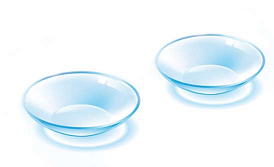
As you'd expect, there are many different kinds of lenses, adapted to different needs.
To begin with, there are two distinct categories: rigid lenses and soft lenses. Of course, these two types of lenses are not designed for the same types of people. Rigid lenses are more frequently used for strong corrections, or for particular pathologies. They are also more expensive to manufacture and are therefore stored for longer, at least a year, which is why soft lenses are preferred for classic corrections.
Soft lenses are used for shorter wear periods (e.g. bi-monthly or monthly) or as disposables. Soft lenses are used in 95% of cases by contact lens wearers, as they are more easily adaptable.
Materials
There are two main categories of lens materials: hydrogel and silico-hydrogel.
At present, however, given the advantages of this material, all lenses are made from silico-hydrogel. So why combine silicone and hydrogel? Quite simply to make them easier for wearers, thanks to a number of factors.
The cornea needs a lot of oxygen to function properly, but wearing contact lenses prevents contact between the air and the cornea. Silico-hydrogel material is permeable to oxygen, i.e. it lets it pass through the lens.
As a result, lenses are ultimately more comfortable, and wear time can be extended.
What's more, they are more resistant to dehydration (making them more comfortable to wear in summer) and to protein deposits.
Why wear contact lenses?
Apart from the sometimes lengthy process of adapting to contact lenses, once you've found the model that's right for you, you'll enjoy a host of advantages:
- Your field of vision is much wider, you have a feeling of freedom and are not hindered by the contours of your glasses.
-Contact lenses follow every movement your eye makes, so you always have maximum acuity wherever you look.
- You can practice many sports (except water sports) comfortably and without worrying about damaging your glasses.
- In general, you have better visual acuity with lenses than with glasses, because the correction surface is located directly on your cornea.
So, are you convinced? If you have any questions about lens adaptation, or if you'd like to have your lenses adapted directly, don't hesitate to contact your ophthalmologist, who will guide you towards the most suitable model. If you have any other questions, we'll be happy to help you make the right choice.







 Loading...