 EN
EN  FR
FR  FR
FR  NL
NL  NL
NL 
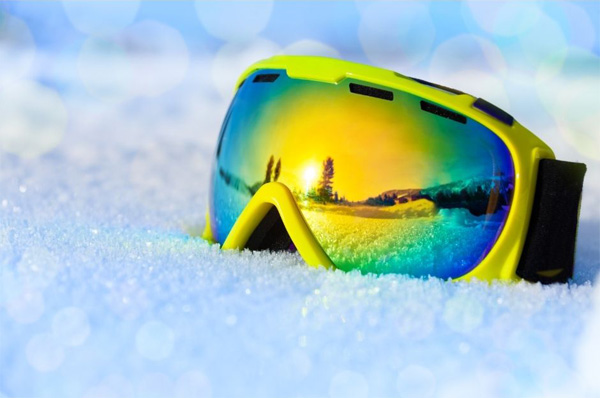
In winter, many people like to visit ski resorts. But it's an activity that can involve risks, so wearing a mask is a must for safe skiing. Making choices can be difficult. But it's even more difficult when you're faced with a multitude of products in the same range, with dozens of different features. How do you find your way through all these models that look so much alike, but still contain important features that you shouldn't overlook, depending on what you're doing? And how do you know if you've made the right choice? Let's find out.
The benefits of wearing a ski mask?
Protect your eyes from UV rays
As with sunglasses in summer, ski masks in winter protect you from the sun's UV rays. As the intensity of the rays increases with altitude, not wearing protection could cause irreversible damage to your corneas. What's more, snow emits a system of reverberation, meaning that it reflects the vast majority of light rays even when the sky is overcast and cloudy. The rays are strongest between 10am and 2pm. All the surrounding brightness can cause glare, leading in less serious cases to a sensation of discomfort or eyestrain.
Maximum comfort
What we remember most about winter is the cold, the wind, the snow and sometimes the rain. At full speed on skis, these meteorological effects are multiplied tenfold. The goggle is designed to alleviate these discomforts. It will protect your upper face from the cold. Your eyes will be camouflaged from the wind, which often makes your eyes water. What's more, when it's snowing or raining, you'll still benefit from the visual clarity you need to admire mountain scenery, but also for your own safety.
Reverberation, snow and rain can alter your vision of the terrain. This can lead to nasty falls over bumps or unnoticed black ice. A mask of a certain color (see the choice of shades) will help you to better visualize your surroundings and enable you toanticipate falls. You'll be able to enjoy your winter activities without fear.
Avoid the risk of injury
The mask is first and foremost a protective shield. It puts a barrier between you, your eyes and the multitudes of small bodies that could injure you. It's not uncommon to get hit by small pieces of rock. At full speed, impacts can quickly become significant. What's more, falls are not uncommon in the mountains - yes, even for the most seasoned riders! You could fall on the tip of your skis or see the tip of your pole come dangerously close to your face. So it's the screen of your ski mask that's going to play its protective role, shielding you from all kinds of impacts to the eyes
What criteria should I take into account when choosing a ski mask?
The different types of protection
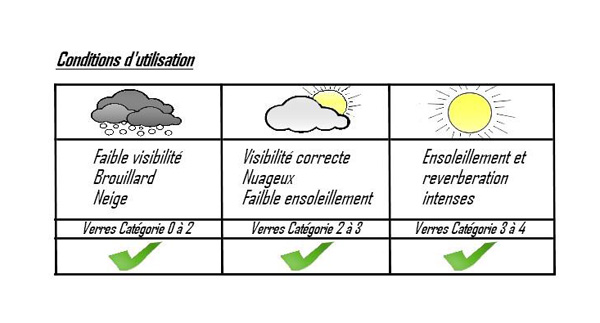
When choosing your ski mask, it's important to pay attention to the category of the screen. This indicates the amount of light filtered:
- - Category 0: Allows over 80% of light to pass through. More suitable for night-time outings.
- - Category 1 screens: Allow 43% to 80% of light through. Suitable for use in bad weather or fog. In other words, when sun exposure is very low.
- - Category 2 screens: let 43% to 18% of light through. Suitable for cloudy weather or when skiing in the shade.
- - Category 3 screens: let through 8% to 18% of light. Suitable for sunny weather.
- - Category 4 screens: Let less than 8% of light through. They are ideal for high light levels, for example at high altitudes or on glaciers.
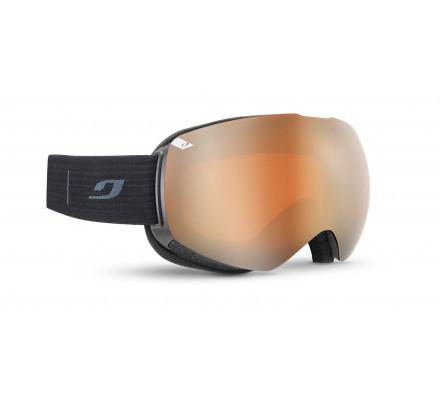
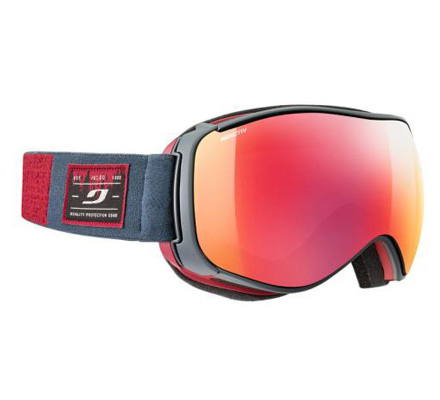
The choice of colors is also important
- - Darker shades of brown or gray: colors change less in good weather.
- - Pink or yellow tints: reliefs are more visible in bad weather.
For sunny days, use darker shades. And on foggy days, opt for more colorful shades.
 |
 |
Different types of mask
Photochromic masks: These are equipped with pigments that adapt to light intensity. They can be switched between categories 1 and 3. As a result, they adapt perfectly to all weather conditions, from bad to sunny. You can keep the same mask and screen, whatever the weather. Spherical screen masks: Built around a sphere, they offer a wider horizontal and vertical field of vision.
Cylindrical screen masks: with a flatter effect, they offer a large horizontal field of view. The angle of view is more optimized and you benefit from a wider field of vision.
Single-screen masks: These can be fitted with an anti-fog treatment to correct fogging inside your mask.
Dual-screen masks: While most masks come with an anti-fog treatment, it's better to opt for a dual-screen mask. The air pocket between the two screens acts as a filter between cold and warm air. This prevents condensation and fogging. However, vision will be slightly more distorted than with a single-screen mask.
It is still possible to add treatments to your mask, such as anti-scratch treatment, which will extend the life expectancy of your mask. Or a polarizing treatment to limit glare caused by reverberation. However, icy conditions will be less visible.
The ski mask is an integral part of your ski outfit, an accessory that demonstrates its importance in terms of comfort and, above all, safety. Depending on your budget and the activities you enjoy, you'll have a choice of several models. If you only visit the mountains occasionally and don't go to high altitudes, models with few options may suit you. However, if you're a more regular sportsman, investing in a goggle with more advanced technology could be the best option. Whatever you choose, make sure you're as comfortable and safe as possible, and now it's time to hit the slopes!






 Loading...